⚾ Vintage Baseball Collection: Crafting a Nostalgic Brand Narrative
In the world of design, authenticity is currency. We often chase the "new," but there is an enduring power in the "old"—specifically, the tactile, imperfect beauty of history. This is where the ⚾ Vintage Baseball Collection steps in. It is not merely a set of images; it is a curated archive of sports ephemera designed to evoke the golden age of the American pastime. For designers, marketers, and content creators, this collection offers a bridge between modern digital precision and the warm, sentimental texture of the analog era.
The Anatomy of Visual Nostalgia
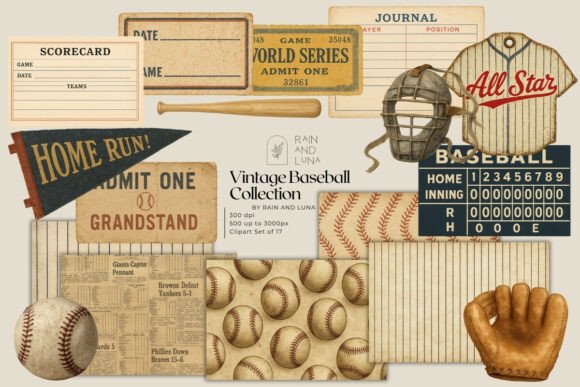
When you look at the assets included in the ⚾ Vintage Baseball Collection, you aren't just seeing tickets and pennants. You are seeing a specific aesthetic language defined by aged-paper textures and a soft, muted color palette. The visual personality of this collection relies heavily on "warmth." The sepia tones and distressed edges simulate the passage of time, creating an immediate emotional connection with the viewer. This is the essence of effective display font psychology, but applied to imagery. It tells a story before a single word is read.
The collection includes 17 high-resolution PNGs with transparent backgrounds. This technical specification is crucial for practical application. As a designer, you know the frustration of trying to extract a subject from a noisy background. The transparency allows these elements—vintage baseballs, bats, and scorecards—to act as modular components. They possess a "lived-in" quality that digital tools often struggle to replicate. The grain, the soft edges, and the muted contrast create a cohesive brand identity that feels grounded and real.
Strategic Applications for Modern Creators
While the collection is rooted in sports history, its utility extends far beyond the baseball diamond. In packaging design, texture is a differentiator. Imagine a craft brewery or a specialty coffee roaster using these assets on their labels. The vintage ephemera suggests hand-crafted quality and heritage. It moves a brand away from sterile minimalism and toward a narrative of craftsmanship.
For editorial design and blogging, these assets are invaluable. Content creators focused on lifestyle, history, or even fatherhood can use these elements to break up long blocks of text. A well-placed vintage ticket or pennant acts as a visual anchor, guiding the reader’s eye and reinforcing the article's theme. It enhances visual hierarchy without relying solely on typography.
Furthermore, consider the realm of social media graphics. In a feed dominated by hyper-saturated, high-gloss images, the muted, textured look of the ⚾ Vintage Baseball Collection creates a thumb-stopping effect. It offers a visual "quietness" that draws the user in. This collection works beautifully for:
- Junk Journals & Scrapbooks: Providing authentic backgrounds for personal storytelling.
- Father’s Day Campaigns: Evoking memories of playing catch or watching the first game.
- Retro Collage Art: Mixing these elements with modern sans serif font typography for a high-contrast, contemporary look.
Integrating Texture with Typography
One of the biggest challenges in design is balancing imagery with type. The ⚾ Vintage Baseball Collection offers a distinct advantage here: its texture. Because the images have a "grain," they pair exceptionally well with specific typefaces. To maintain that cohesive vintage style, you might pair these graphics with a sturdy serif font or a rugged script font. The key is to avoid overly polished, geometric fonts that might clash with the organic nature of the aged paper textures.
However, contrast is also a valid strategy. Using a clean, modern sans serif font over a textured baseball background can create a sophisticated "old meets new" aesthetic. This approach is popular in web design and logo design for startups that want to convey reliability but with a modern edge. The texture of the collection adds depth, ensuring that even a simple layout feels substantial and professional.
Practical Implementation and Licensing
Before integrating any design assets into a client project or your own product line, clarity on licensing is non-negotiable. The ⚾ Vintage Baseball Collection is designated for personal use. This is a critical distinction for entrepreneurs and small business owners. It means these assets are perfect for your own journals, gifts for friends, or non-commercial digital wallpapers. However, you cannot resell the file as clipart or redistribute it.
Understanding this boundary protects both your business and the original creator. If you are a graphic designer creating a physical product for a client—such as a party invitation or a scrapbook page—ensure that the final output is a flattened design (like a printed PDF or JPG) and not the raw PNG files being handed over. Always read the specific terms included with your download to maintain professional integrity.
Evaluating Fit for Your Project
How do you know if this collection is the right tool for your specific job? It comes down to emotional resonance. Does your project need to convey warmth, history, or sentimentality? If the answer is yes, the ⚾ Vintage Baseball Collection is a strong candidate. It works best when the goal is to humanize a message. Corporate sterility is the enemy of engagement; these assets provide the antidote.
Consider the medium as well. Because the files are 300 DPI and high-resolution, they are robust enough for print. You can scale them for posters, flyers, or large-format printable crafts without losing the integrity of the texture. In the digital space, the transparent PNGs are lightweight enough to load quickly on websites, ensuring that your web design remains fast and user-friendly.
Ultimately, the ⚾ Vintage Baseball Collection is more than just clipart. It is a toolkit for storytelling. Whether you are a hobbyist looking to enhance a personal journal or a marketer aiming to create a campaign with soul, these assets provide the visual vocabulary needed to connect with an audience on a deeper, more nostalgic level. It reminds us that in a digital world, the textures of the past still have a vital place in our visual future.